
How Often Should You Clean Your Water Tank in Kolkata?
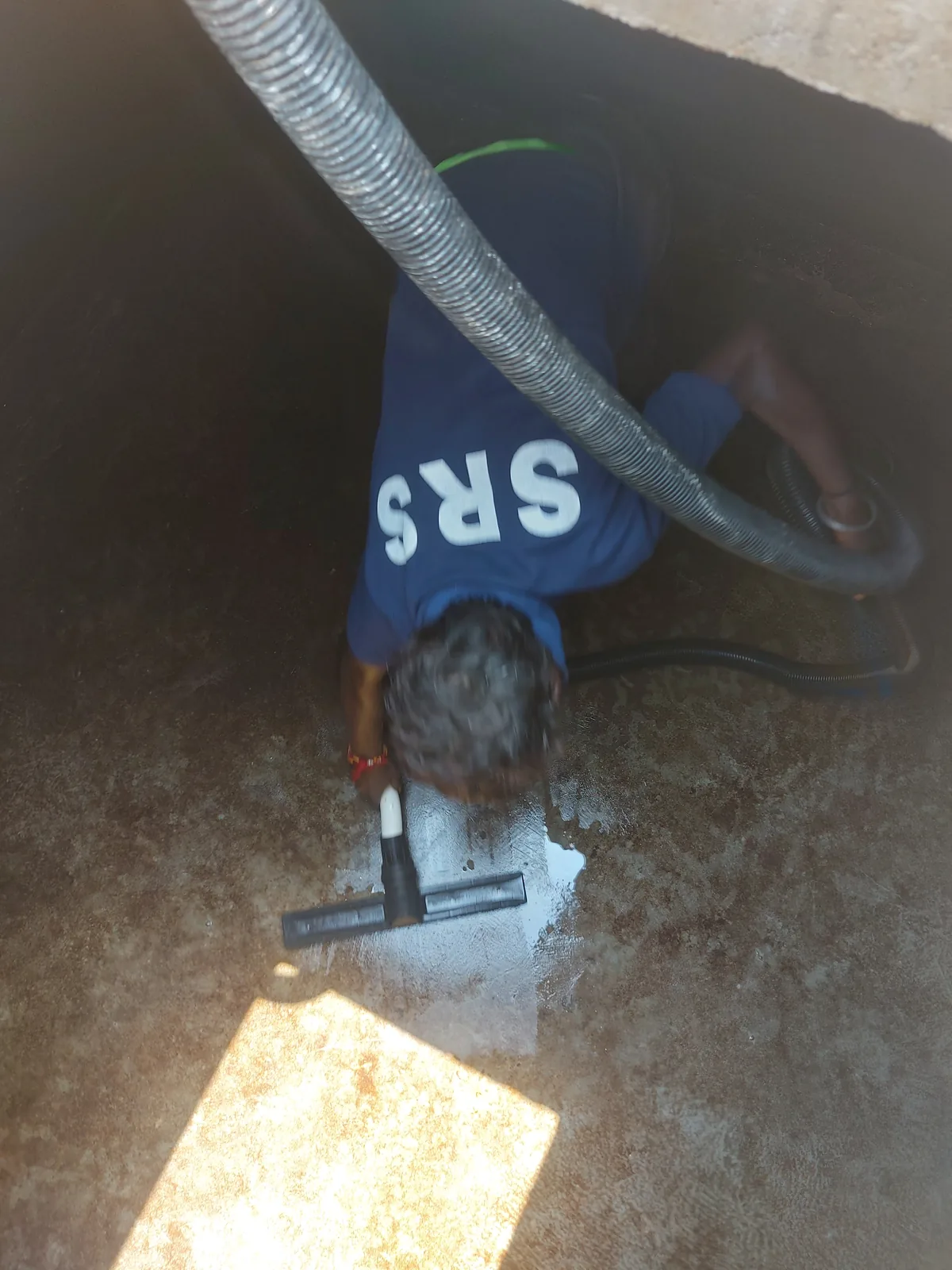
Short answer: clean your overhead and underground water tanks every 6 months. In Kolkata's humid climate, and with hard water, sediment, algae and bacteria build up faster than most people expect — so if your tank collects heavy sludge or algae quickly, schedule it sooner.
Why every 6 months?
A tank can look clear from the top and still be dirty inside. Sediment settles on the floor, and bacteria don't float around on the surface — they stick to the walls as a slimy biofilm and keep multiplying for months before anyone sees or smells a problem. A single cleaning isn't permanent either: the moisture and organic matter left in any tank let bacteria start building that layer again. Cleaning twice a year keeps that build-up from ever getting established.
Warning signs your tank needs cleaning now
- Muddy, yellowish or discoloured water coming from the taps
- Sand or rust particles in buckets or in your water purifier filter
- Green algae or a slimy feel on the tank walls near the lid
- A smell from the water, or a tank that hasn't been opened in over a year
- Insects, worms or other creatures seen in the tank — on real jobs we have found dead birds, lizards and live red worms breeding in the sludge
Overhead vs underground tanks
Both need the same 6-month cycle. An overhead tank in a typical 6–8 flat building (RCC or PVC, up to 2,000 litres) usually takes 40 minutes to an hour to clean. Underground tanks and sumps take a little longer — usually 1 to 1.5 hours — because more sediment collects at the bottom and there are often more chambers.
What a proper clean actually involves
Scrubbing with a brush and draining the water is not enough. SRS follows the same 6-stage mechanized process on every tank:
- Mechanized de-watering — water below the foot-valve level is pumped out.
- Sludge removal — the settled sludge on the floor is sucked out.
- High-pressure cleaning — jet cleaners strip deposits, algae and biofilm off the walls and ceiling.
- Vacuum cleaning — an industrial vacuum removes the loosened dirt.
- Anti-bacterial treatment — walls and ceiling are sprayed with hydrogen peroxide (H2O2).
- UV radiation sterilization — UV light kills any bacteria still left in the tank.
PVC tanks vs cement tanks
In PVC (Sintex-type) tanks, iron and sediment form a layer stuck to the plastic walls, so a cleaning chemical is used during the clean to loosen it before pressure-washing. Cement (RCC) tanks don't need this. Every tank, PVC or cement, gets the H2O2 anti-bacterial spray after cleaning.
For apartments, societies and offices: use an AMC
If you manage a housing society, hospital, school or office, an Annual Maintenance Contract (AMC) takes the 6-month schedule off your hands — SRS sends a WhatsApp reminder when the next cleaning is due, so nobody has to track it.
Book a tank cleaning in Kolkata
Send your area, tank type and size on WhatsApp — most messages get a reply within 30 minutes.
WhatsApp 9007718983Call now