Part 3 of 14 · Festival Water Care series
বর্ষার পরে আন্ডারগ্রাউন্ড রিজার্ভার পরিষ্কার: কলকাতার বাড়িগুলো যা ভুলে যায়
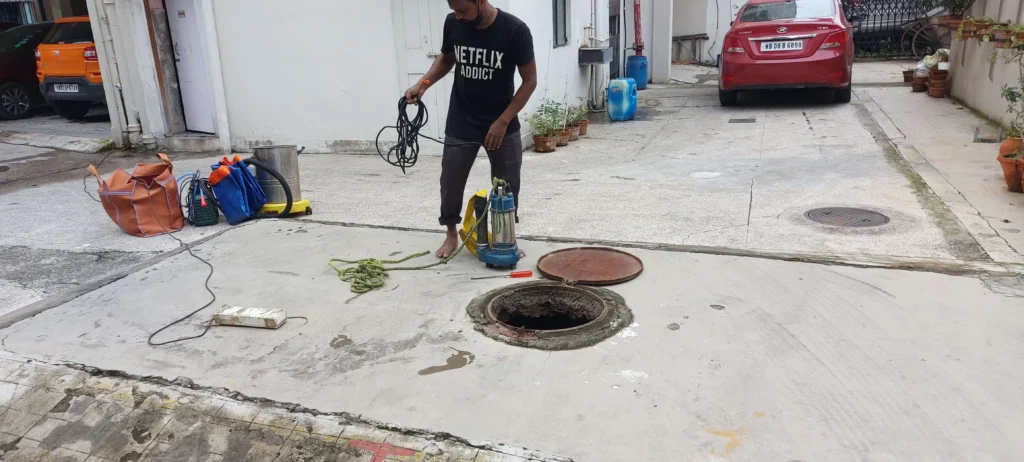
বর্ষার পরে মাটির নিচের ট্যাঙ্ক বা রিজার্ভারে বালি আর কাদা জমে যায়, অথচ ওপর থেকে কিছুই বোঝা যায় না। কলের জল ঘোলা লাগছে, বালতির তলায় বালি জমছে, বা পাম্প বারবার আটকে যাচ্ছে? তাহলে এবার রিজার্ভারটা সাফ করানোর সময় হয়েছে। রিজার্ভার নোংরা থাকলে ছাদের ট্যাঙ্কেও সেই নোংরা জলই ওঠে। SRS মেশিন দিয়ে ৬ ধাপে রিজার্ভার পরিষ্কার করে, সাধারণত ১ থেকে দেড় ঘণ্টা লাগে। তারপর প্রতি ৬ মাসে একবার করালেই নিশ্চিন্ত।
Why does your underground reservoir get dirty after the monsoon?
An underground reservoir is the water tank under your building or courtyard. Water from the main supply line fills it first, and a pump then sends that water up to the tank on your roof. That makes the underground tank the first stop for everything the water carries.
- Muddier supply water: During the rains, the water coming in often carries more silt and sand. It is heavy, so it sinks and settles on the reservoir floor.
- Waterlogging: Most reservoir lids sit at ground level. When the lane or courtyard floods, dirty rainwater can seep in through gaps around the manhole cover.
- Out of sight, out of mind: You see your roof tank sometimes. The underground tank stays closed under a heavy lid, so months of build-up go unnoticed.
What do we usually find inside an underground tank after the rains?
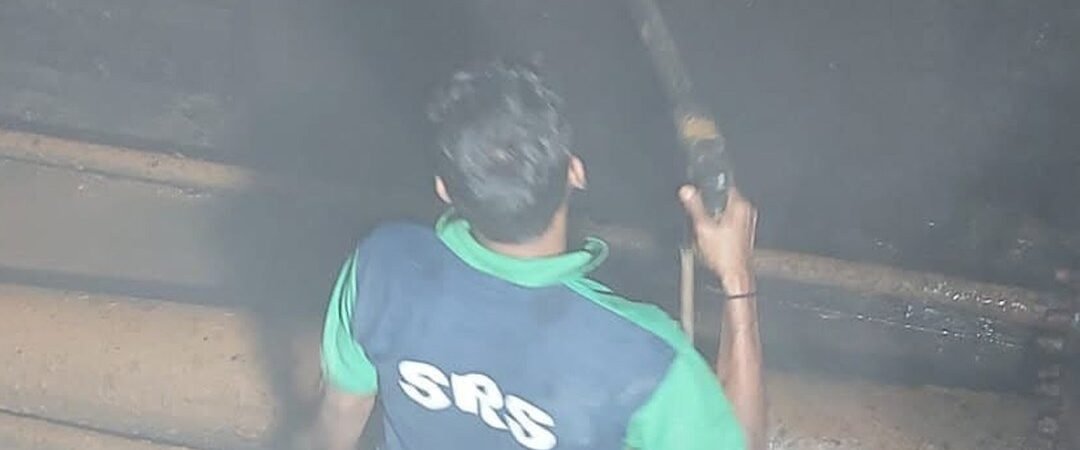
The photo at the top of this post shows a real underground reservoir in Kolkata, before cleaning. This is what is often waiting under the lid:
- A thick layer of sand and silt on the floor, sometimes piled around the pump
- Grey or brown sludge, the soft mud that every litre of your water passes over
- Slimy walls, a slippery layer where germs stick and grow
- Insects and live red worms. On real jobs, SRS teams have found red worms breeding in the sludge.
What are the signs your underground reservoir needs cleaning now?
- Muddy or yellowish water from the taps, especially after the rains
- Sand at the bottom of buckets, or in your water purifier filter
- The pump gets blocked or struggles more often
- Your roof tank keeps getting dirty soon after it was cleaned
- Floodwater reached the reservoir lid during waterlogging
- The underground tank has not been cleaned in more than 6 months
Not sure how often is right? Read our guide: How often should you clean your water tank in Kolkata?
Why clean the underground reservoir before the roof tank?
Because the underground reservoir feeds the roof tank. If only the overhead tank is cleaned, the pump soon sends the same sand and sludge back up. The simple rule: clean the underground tank first, then the overhead tank, on the same day. That way, clean water goes into a clean tank.
How does SRS clean an underground reservoir?
SRS – Water Tank Cleaning & Solution has followed the same 6-stage mechanized process since 2017, and we are ISO 9001:2015 certified:
- Mechanized de-watering: Water below the foot-valve level is pumped out.
- Sludge removal: The settled sand and sludge on the floor is sucked out.
- High-pressure cleaning: Jet cleaners strip deposits, algae and slime off the walls and ceiling.
- Vacuum cleaning: An industrial vacuum removes the loosened dirt.
- Anti-bacterial treatment: Walls and ceiling are sprayed with hydrogen peroxide (H2O2).
- UV radiation sterilization: UV light is used inside the tank as the final step.
How long does it take, and is any chemical used?
An underground tank usually takes 1 to 1.5 hours. Each SRS team has 2 experienced cleaners, and we send 1 to 4 teams depending on the size of the tank. Most underground reservoirs are built of cement (RCC), and cement tanks do not need the cleaning chemical we use for PVC tanks. Every tank, cement or PVC, gets the H2O2 anti-bacterial spray after cleaning, followed by UV sterilization.
How can you keep your underground tank cleaner between cleanings?
- Keep the manhole cover closed, and check it for gaps or cracks.
- Do not let rainwater from the roof or the courtyard flow towards the lid.
- Keep the area around the reservoir clean and dry.
- Book a cleaning every 6 months. Housing societies can choose an AMC (Annual Maintenance Contract), so nobody has to remember the date.
Whether it is a house in Behala, a housing society in New Town, a building in Beliaghata or a home in Howrah, SRS cleans underground reservoirs across Kolkata and Howrah. See all areas we serve.
Clean water at home is one of the simplest ways to protect your family’s health. The World Health Organization’s drinking-water fact sheet explains why safe water matters so much.
Frequently asked questions
When should I clean my underground water tank after the monsoon?
As soon as the heavy rains are over. That clears the sand and sludge the rains left behind, and starts a 6-month cycle for the year ahead.
How long does underground reservoir cleaning take in Kolkata?
An underground reservoir usually takes 1 to 1.5 hours with SRS’s 6-stage mechanized process.
Should I clean the overhead tank at the same time?
Yes. The underground reservoir feeds the overhead tank, so clean the underground tank first and then the overhead tank on the same day. Otherwise, dirt from below goes straight back up.
Is any chemical used to clean an underground reservoir?
Cement (RCC) tanks, like most underground reservoirs, do not need the cleaning chemical used for PVC tanks. Every tank gets a hydrogen peroxide (H2O2) anti-bacterial spray after cleaning, followed by UV sterilization.
Do you clean underground reservoirs in Howrah and in apartments?
Yes. SRS – Water Tank Cleaning & Solution cleans underground and overhead tanks in homes, apartments and offices across Kolkata and Howrah.
Is your underground tank hiding the monsoon’s mud?
Send your area, tank type and size on WhatsApp — most messages get a reply within 30 minutes.
Book on WhatsApp WhatsApp-এ বুক করুন Call nowPVC (Sintex) vs Cement Tank: Why the Cleaning Method Is Different
Get notified on WhatsApp
Festival Water Care series: all parts
- How Often Should You Clean Your Water Tank in Kolkata?
- This Dussehra, Defeat the 10 Hidden Enemies Inside Your Water Tank
- Underground Reservoir Cleaning After Monsoon: What Kolkata Homes Miss
- PVC (Sintex) vs Cement Tank: Why the Cleaning Method Is Different (coming soon)
- Diwali Guests Coming? Light Up Your Home and Clean Your Water Tank First (coming soon)
Related services: Residential Tank Cleaning → · Apartment Tank Cleaning → · Commercial Tank Cleaning & AMC → · All FAQs →